Commercial and Multifamily Property Owners in Minnesota: Get Thousands per Port for EV Charging Through Xcel’s New Rebate Program

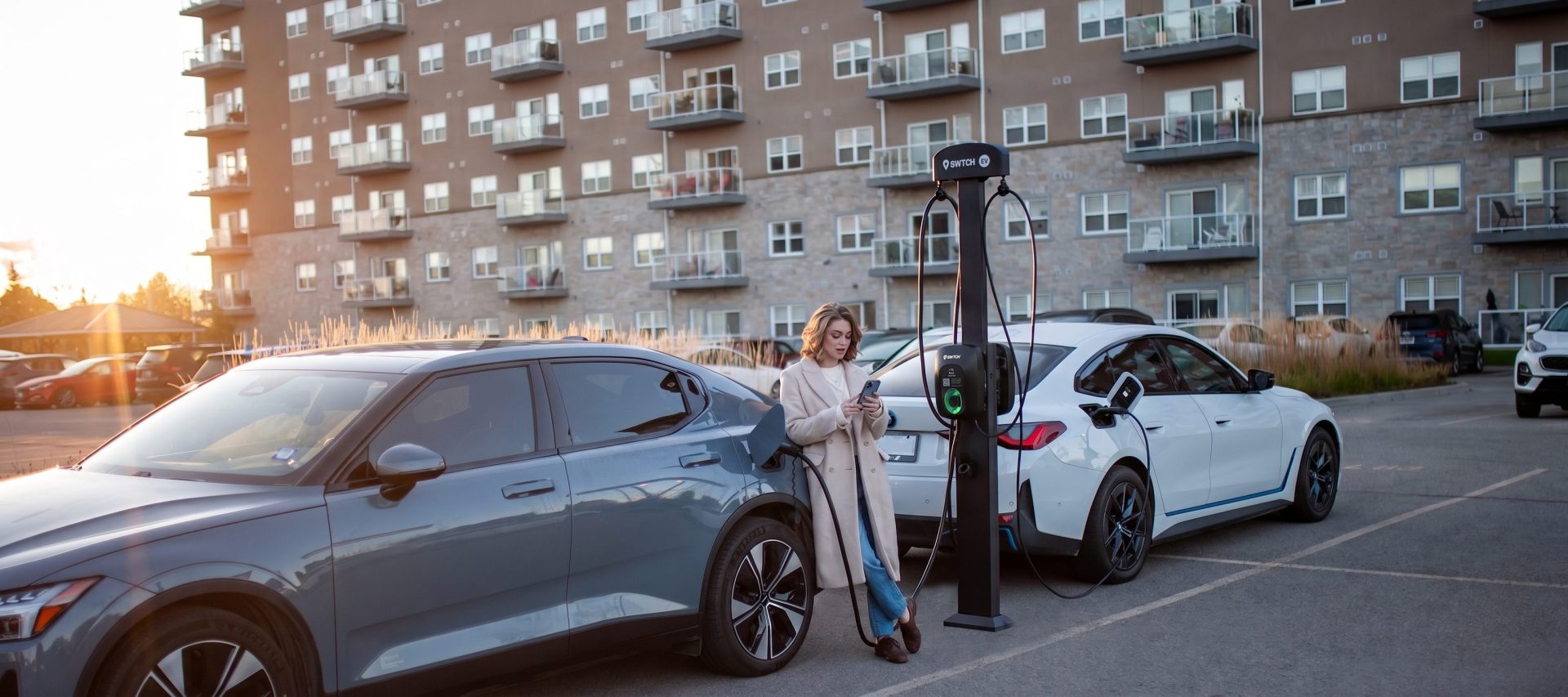
Electric vehicle adoption is climbing across Minnesota, and the drivers who park at your property increasingly expect somewhere to charge. For multifamily owners and managers, along with commercial property owners, developers, and site hosts, Xcel Energy’s new Commercial EV Infrastructure Rebate and Advisory Program is a substantial opportunity to wire, equip, and build out EV charging — with flat rebates covering a large share of the cost.
Here’s a detailed look at the program, what it offers your site, who qualifies, how to apply, and how to make the most of it.
What Is Xcel’s Commercial EV Infrastructure Rebate and Advisory Program?
The program is run by Northern States Power Company (Xcel Energy) and pairs cash rebates with advisory support, so customers get both funding and technical guidance to get charging built.
Unlike a program that offers a single rebate, this one splits the money into two categories you can combine on the same project. One rebate covers the electrical infrastructure behind the wall, and the other covers the chargers themselves. That means help with both the expensive make-ready work and the hardware, whether you’re adding resident charging to an apartment building, wiring a single parking lot, or building public fast charging.
Available Funding for Different Properties
The program offers two separate rebates that can be combined for the same charging port. Both are paid as flat amounts for every port you install (a single connector, where one station can hold several), rather than as a percentage of your costs.
1. Infrastructure Rebate (EVSI) — $6,500 to $20,000 per Port
The first rebate covers the make-ready work: the panels, conduit, trenching, and wiring that bring power to the spot where a charger connects. Xcel calls this the Electric Vehicle Supply Infrastructure (EVSI) rebate, and it’s the broader of the two, open to any Xcel commercial customer in Minnesota installing charging at a commercial premise.
The amount depends on the charger type and whether your site sits in a designated Environmental Justice community (areas the state and Xcel identify for added charging investment, based on factors such as income and pollution burden):
- Level 2, the common 240-volt speed for workplaces and apartments: $6,500 per port, rising to $10,000 in an Environmental Justice community
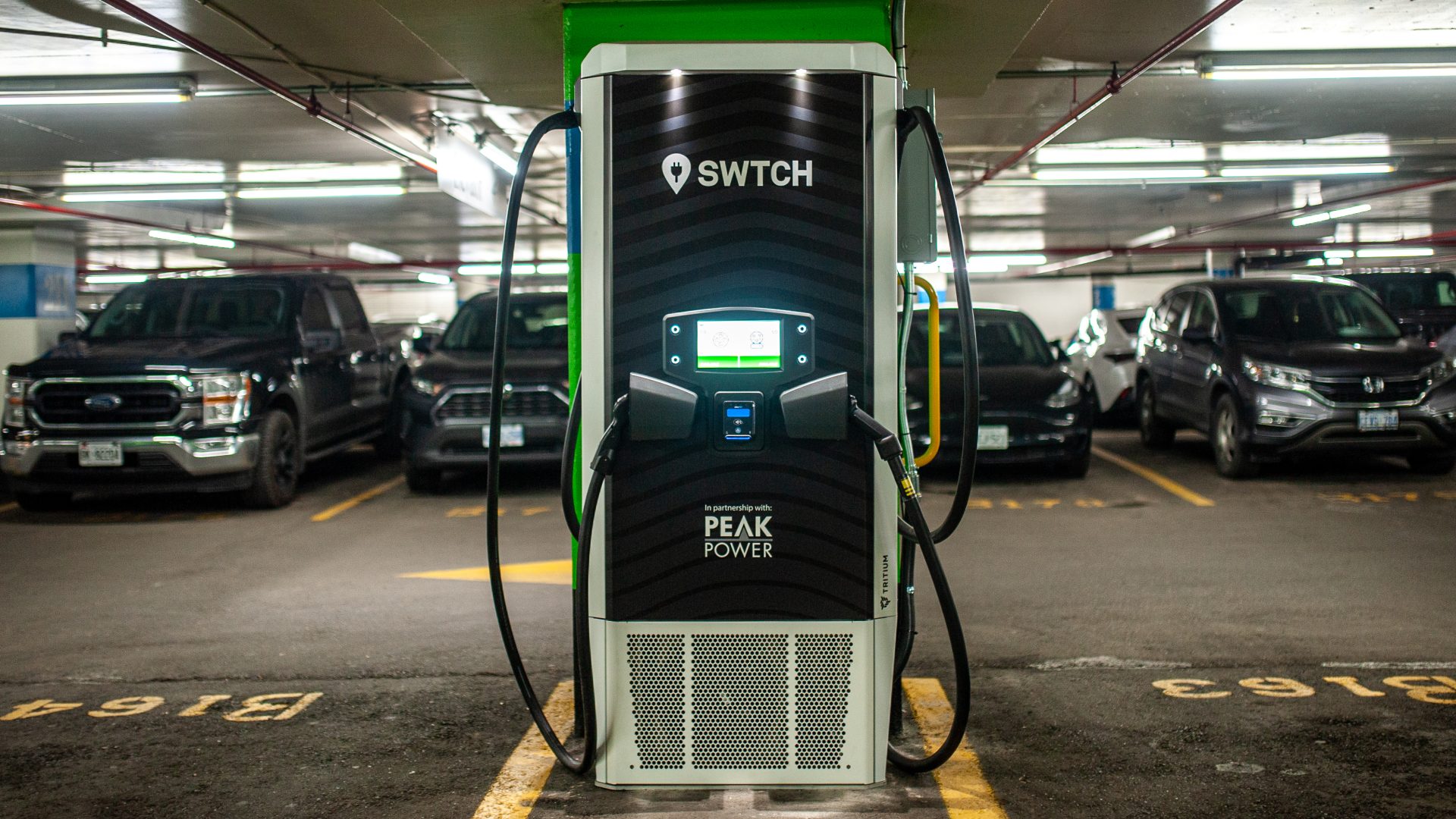
- DC fast charging (DCFC), the high-power stations that charge in minutes: $13,000 per port, rising to $20,000 in an Environmental Justice community
2. Charger Hardware Rebate (EVSE) — $1,200 to $35,000 per Port
The second rebate covers the charger itself, the Electric Vehicle Supply Equipment (EVSE). Xcel offers hardware rebates only for a few high-priority uses, and where they apply, you can claim them on top of the EVSI rebate for the same port. Multifamily is one of just three qualifying uses, which makes apartment and condo properties one of the sweet spots for combining both rebates:
- Multifamily Level 2: $1,200 per port, or $1,800 in an Environmental Justice community, for apartment and condo properties adding resident charging
- Public DCFC: $25,000 per port, or $35,000 in an Environmental Justice community, for fast chargers open to the public
There’s also funding available for DCFCs serving school buses: $20,000 per standard port, or $40,000 per bidirectional port. A bidirectional charger can send power from the bus battery back to the grid, not just into it, which is why it carries the higher amount.
Stacking the funds
Because the two rebates stack, the real value shows up when you combine them on the same port — and multifamily is one of the uses where you can.
Take a multifamily building adding 10 Level 2 ports for residents: at $6,500 in infrastructure plus $1,200 in hardware per port, that’s $7,700 a port, or $77,000 across the 10. In an Environmental Justice community, the same 10 ports draw $11,800 each, or $118,000. For an owner weighing resident charging as an amenity, that funding turns a major capital project into a far smaller net cost — the kind of number that makes charging worth offering now rather than deferring, and something prospective and current residents increasingly look for when they choose where to live.
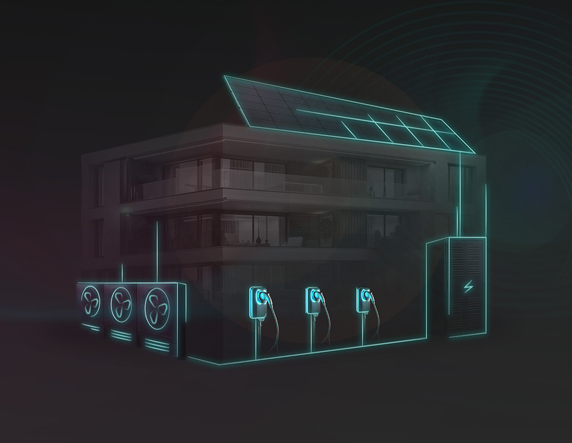
The flat structure has one more consequence worth noticing: the rebate doesn’t shrink if your costs do. A design that avoids a panel or service upgrade — for example, using load management, which charging providers like SWTCH use to run multiple ports on a building’s existing electrical capacity — leaves the same $6,500 covering a much larger share of a smaller bill.
Public fast charging reaches higher still: four public DCFC ports in an Environmental Justice community stack to $55,000 each — $20,000 in infrastructure plus $35,000 in hardware — or $220,000 for the four, and $38,000 each ($152,000) outside those communities.
Eligibility Requirements
Who Can Apply?
The infrastructure (EVSI) rebate is open to any Xcel Energy commercial customer in Minnesota installing charging at a commercial premise. If you’re wiring a commercial site for chargers in Xcel’s Minnesota electric service territory, this rebate is likely available to you.
The hardware (EVSE) rebate is narrower. Your project has to match one of three uses: a multifamily property adding Level 2 charging, a site offering public DC fast charging, or a school bus operator installing DCFC. A standard workplace lot, for example, can still claim EVSI for its Level 2 wiring, but would not qualify for a hardware rebate.
Environmental Justice Areas
The higher rebate amounts apply only to installations inside a designated Environmental Justice community. Because the gap between the standard and Environmental Justice rate is large, confirm your address against the Environmental Justice Map before you budget around the bigger figure.
Charging Equipment
Chargers will need to meet Xcel’s program specifications, which typically means networked, program-approved models. Confirm the approved-model list with Xcel or your installer before you buy hardware.
The Application Process
Xcel plans to open funding applications in the coming months. The exact portal and forms will be published when the window opens, and the sequence below is the practical path to follow.
- Confirm your eligibility — Check that your site is in Xcel’s Minnesota electric service territory and identify which rebates apply (EVSI alone, or EVSI plus an EVSE use case).
- Check your location — Confirm whether your address falls in an Environmental Justice community, since that decides whether you budget around the standard or the higher amount.
- Decide how the rebate will be paid — File for it yourself, or assign it to your contractor or charging developer so it comes off your invoice as an upfront discount.
- Choose program-approved equipment — Select chargers that meet Xcel’s specifications and line up your electrical contractor.
- Submit your application — Apply through Xcel’s program once the window opens, with your site, equipment, and cost details.
- Energize your ports and get paid — Rebates are paid per energized port, so the ports have to be installed and switched on to count.
What You’ll Need
Xcel will publish the full documentation list when applications open. Expect to provide:
- Proof you’re an Xcel commercial customer in Minnesota
- Site and electrical details for the installation
- Invoices and specifications for the approved charging equipment
- Confirmation that the ports have been energized
If you’re assigning the rebate to a contractor or developer, that assignment is arranged as part of your agreement with them.
Why Act Now: Timing Considerations
The Minnesota Public Utilities Commission approved Xcel’s Transportation Electrification Plan in May 2026, and Xcel plans to open funding applications for this program in the coming months. That means scoping your site and choosing equipment today puts you in a position to apply as soon as possible, rather than your application being just one of many submitted weeks or months after the program opens for submissions.
There’s also a practical reason beyond the calendar. Because the rebate can be assigned as a point-of-sale discount, the usual upfront cash barrier to installing chargers largely disappears. Charging has become something residents, tenants, and customers look for when they choose where to live, work, and park, and the sites that add it while this funding is on the table will be the ones offering it first.
Point-of-Sale Rebates: How Assignment Lowers Your Upfront Cost
One feature sets this program apart from a typical rebate: you don’t have to claim the money yourself. Xcel lets you assign the rebate directly to your installing contractor or EV charging developer, who can then apply it as an upfront discount on your invoice. Instead of paying full price and waiting for a check, you see the rebate come off the top.
That design also supports charging-as-a-service (CaaS) arrangements, where upfront capital expenses are replaced with a predictable monthly payment for a contract typically lasting 5 years or so.
Get Expert Help With Your Project
Matching the right rebate to each port, choosing program-approved chargers, and coordinating the electrical work and paperwork across a site takes real coordination. Our team at SWTCH specializes in helping multifamily and commercial property owners through the entire EV charging process, from initial feasibility through installation and ongoing management, including the rebate assignment if you want the discount applied upfront.
Get in touch with us today to learn how we can help you make the most of Xcel’s rebates and deliver reliable charging for the people who use your property.