

Index
EV Charging for New Apartment Buildings: Why Now, and How to Do It Right
Building an apartment building means making a few hundred decisions right away and trying to figure out which other ones can wait. EV charging might look like one that can be left until later, but it isn’t, because it’s a project directly tied to your electrical infrastructure, and electrical decisions tend to be made early.
Plan out EV charging for a new apartment building when the project is mostly drawings on the page, and you’re talking in terms of conduit and wiring runs and panel space. Plan it out after occupancy, and charging has become a fairly involved construction project inside a finished building.
Add to that the reality that EV charging is becoming a requirement in more jurisdictions, and the case for planning and installing EV charging right away just gets stronger.
Below are five things to get right when you plan EV charging for a new building, and how to approach each one. And if your project is already pretty far along, don’t worry: charging can be added at any stage of construction, including after the building is finished. The earlier you start, the cheaper and simpler it is, but there’s a workable path whether you’re still working with sketches or already have residents moving in.
Reason 1: EV-readiness is becoming mandatory, and buildings prepping for 2027–28 occupancy will likely be impacted
For years, EV charging in new apartments was a differentiator. Increasingly, across the country, it’s a requirement.
Note that Canada’s national building code doesn’t currently require EV charging in apartment buildings, so the rules are set province by province, and several provinces have handed the decision down to municipalities. The result is a patchwork: what’s mandatory in one city may not apply in the next town over.
Where things stand today: British Columbia is furthest ahead, with more than 20 municipalities, including Vancouver, Surrey and Victoria, already requiring new residential parking to be EV-ready, often for every stall. Quebec has required EV-ready provisions for single-family homes since 2018 and is extending them further, with the City of Laval and several Montreal boroughs adding their own rules for apartment buildings. Ontario has no provincial mandate, but a growing list of cities such as Toronto, Waterloo, Kitchener and Ottawa require it or are moving to it. Multiple other provinces and cities are drafting their own EV-readiness requirements.
The direction is one-way: more jurisdictions are adopting these rules, not fewer, and EV-ready provisions have been raised for a future edition of the national code, which would eventually set a requirement everywhere.
What to do about it: check both your province and your municipality for the rules that apply on your permit date, and adhere to whichever is stricter. Requirements vary widely from one city to the next, so this is worth confirming early rather than assuming there’s a single national standard. A good starting point is Electric Autonomy’s MURB EV-Ready Bylaw Tracker, a national, regularly updated summary of which jurisdictions require what.
Reason 2: Designing EV charging into new apartment buildings costs a fraction of retrofitting
The least expensive EV charging projects are the ones that get planned before the concrete starts pouring.
While a building is still a drawing, charging is just a set of line items, things to be fiddled with and accounted for before any on-the-ground work gets done. You size the electrical service with charging in mind. You reserve panel and electrical-room space. You plan to run conduit while the walls are still open. None of it is difficult, and none of it is expensive in the context of a larger construction project to be done.
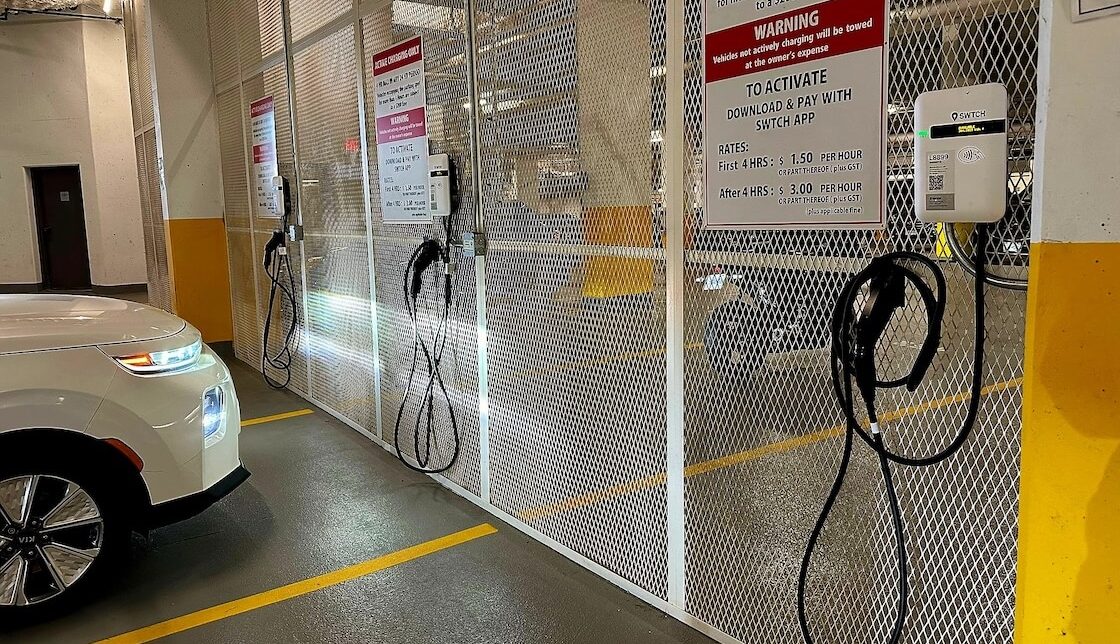
Once the building is finished and occupied, that all changes. Slabs have to get cut. New feeders get pulled across a parkade full of parked cars. Sometimes the main service has to be upgraded, which drags the utility back into a project that was supposed to be done.
On the one hand, this is more involved work, and it’s more costly, but it’s also routine and a big part of what we help our customers do here at SWTCH. So if you need to complete a retrofit, don’t stress! It’s absolutely possible. It just rewards planning even more than new construction does.
But what if you’re not sure what demand for charging is likely to be at your new property? The good news is that, provided you’re permitted by applicable regulations, there are multiple ways to ready your building for charging without going to the full expense of installing functioning chargers at every parking stall.
Broadly speaking, here are the three tiers of EV-readiness:
| Tier | What’s Installed | What’s Still Needed to Charge |
| EV-capable | Conduit pathways and reserved panel space | Wiring pulled, circuit run, charger mounted |
| EV-ready | Full capacity to install an EV charger when needed | Charger mounted (no electrical work) |
| EV charger installed | Circuit plus a working charger | Nothing; it’s operational |
Unless regulations specify otherwise, a good move is to aim for EV ready across a meaningful share of stalls, and EV capable on the rest.
One other important tip: Leverage load management technology.
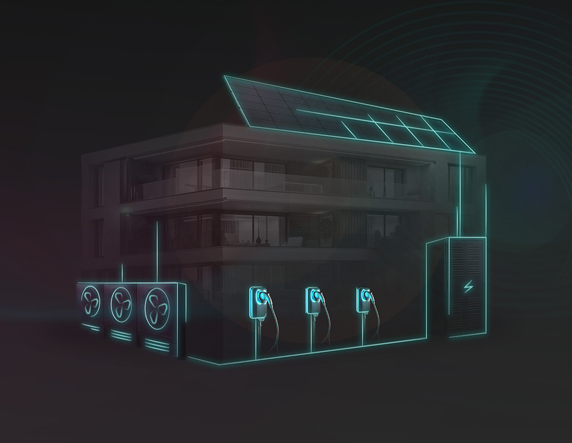
Give every stall its own full-power circuit and you’ll pay to install a service far larger than the building will ever draw. Load management shares capacity across chargers instead, so one feeder can serve many stalls.
Our take: It’s a must-have technology that will keep your EV charging costs reasonable, both now and down the road, when you’ll likely need to put more chargers into service.
Learn more about EV charging load management
Reason 3: Wait too long, and grid and transformer lead times can delay your occupancy date
The biggest factor that could actually delay a handover date or occupancy date is the capacity of the local grid to accommodate your building’ new chargers.
A parking facility full of Level 2 chargers can add a meaningful new load, and securing enough utility service capacity, plus a larger distribution transformer where one is needed, is something to plan well in advance.
In Canada, the lead time for a transformer upgrade can take months, and timelines vary by utility and region, so the service conversation should happen during the design phase instead of when construction is underway.
The season during which work will likely be done compounds this. You don’t want to have to plan and oversee trenching and concrete work in the middle of a harsh winter, so try to have all your electrical planning sorted well in advance.
What to do about it: have your electrical consultant open the service-capacity conversation with the local utility during design, not after. Have them confirm two things early:
1. How much capacity the site can get
2. What the lead time is for a transformer if you need one.
Those two details determine what’s realistic for your planning, and they’re far cheaper to get at the design stage than to discover mid-build.
Reason 4: Funding programs tend to reward buildings that plan early
Financial support for EV charging in Canada comes and goes. Federal programs open and close, provincial rebates get topped up, restructured, or fully subscribed, utilities run their own offers, and carbon credit revenue is available in some provinces and not others. It’s not the type of thing that’s easy to predict or time.
If you’re hoping to take advantage of funding programs (and you should, if you can), here are two pieces of advice.
Check the application rules before you spend. Many of the larger programs, including BC’s multi-unit streams, require pre-approval before you buy equipment or start electrical work, and costs incurred beforehand aren’t eligible. Others accept claims after installation. The rules differ by program and change over time, which is why getting a handle on funding programs should be done early, rather than as an afterthought.
Know which pot you’re eligible for, because it often depends on your stage. Many rebate programs were built to help existing buildings catch up, so they’re aimed at retrofits — BC’s multi-unit rebates, for example, are for retrofits only, and buildings constructed after a local EV-ready bylaw took effect don’t qualify. New construction is increasingly expected to arrive ready, which is why Quebec excludes new builds from Écorecharge once its updated code takes full effect.
None of this means there’s nothing for your project; it means the right program depends on where your building is in its life, and it’s something you should try to sort out early.
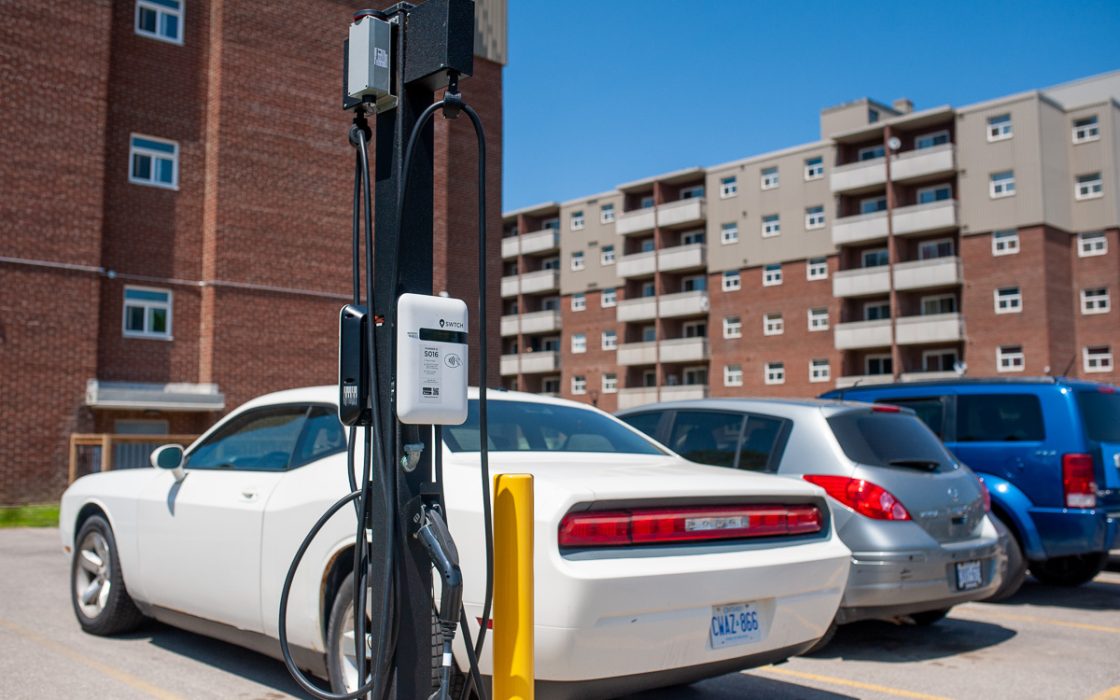
Reason 5: Charging is an amenity you can market, not just a cost
Most of what we’ve covered so far has been in service of avoiding cost and stress. It’s important to cover the pure positives as well.
More EVs are on the road than ever, and most charging happens where people live — roughly 80% of it, per the U.S. Department of Energy. For a resident with an EV, a building without charging is a worse fit for their lifestyle, and it’s a factor that will impact their leasing decisions.
Demand is not speculative either. Under Canada’s Electric Vehicle Availability Standard, zero-emission vehicles are set to rise from 20% of new light-duty sales in 2026 to 60% by 2030, and the number of EVs on the road is projected to grow from about 480,000 today toward 5 million by 2030 (NRCan).
That means a building that opens without charging in 2028 is opening at a disadvantage, whereas a building that opens with charging in place has an amenity it can market and monetize. Buildings that are already open aren’t shut out of the upside, of course — adding charging later still captures the same demand— it just takes a retrofit, which will cost more than building for EV charging from the start.
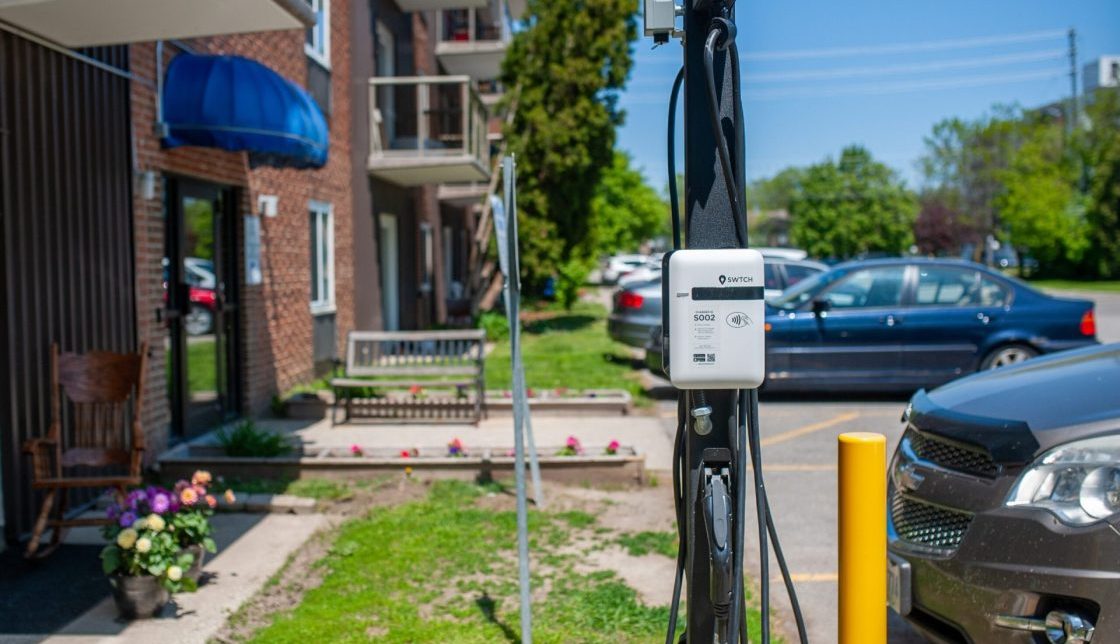
The through-line across all five reasons to get ahead with EV charging is timing. Planning EV charging for new apartment buildings early costs a fraction of retrofitting it, and grid capacity and grant applications both run on timelines longer than most build schedules assume.
Plan for charging early, and it’s a handful of line items and a smart investment for welcoming in a wave of EV-driving tenants. Leave it until later, and it’s a bigger project, but not an impossible one.
The point isn’t that there’s a single deadline you either make or miss; it’s that every month of lead time makes charging cheaper and simpler to deliver. Wherever your building sits on that timeline, there’s a sensible next step.
Ready to explore EV charging for your property?
Contact SWTCH today to start building the solution you need.
Frequently Asked Questions
Are new apartment buildings in Canada required to have EV charging?
It depends on the province and municipality, but this sort of requirement is expanding as jurisdictions adopt the 2025 National Model Codes and pass their own EV-ready bylaws. Some regions already mandate EV-ready infrastructure in new multi-unit buildings, and others are phasing it in over the next couple of years. The best move is to check your specific provincial building code and your municipality’s zoning and parking rules for the date your permit is issued, then design to the stricter of the two.
When should we start planning EV charging relative to occupancy?
At schematic and electrical design, if at all possible. Three long-lead items could each require months of runway: confirming code requirements for your permit date, securing utility service and any transformer capacity, and sorting out funding eligibility, since some programs require pre-approval before you spend. For a 2027–28 opening, the charging plan will ideally be settled well before the electrical drawings are finalized.
Our building is already built or occupied. Is it too late to add EV charging?
No, retrofitting charging into an existing building is common, and it’s a core part of what SWTCH does. It generally takes more planning than a new build, since you’re working around finished surfaces, the electrical capacity you already have, and residents who are already parking on site, but there’s always a workable path. The main variables are your available electrical capacity and how the parking facility or area is laid out, both of which we can assess. Whenever you’re ready, contact us to start the conversation.
Can one electrical service support charging for the whole building?
Often, yes, with load management. Rather than running a separate full-power circuit to every stall, an energy management system shares available capacity across chargers and shifts demand through the day. That lets a fixed service feed far more spaces than a one-circuit-per-stall design, and it is usually cheaper than upsizing the service or adding a transformer.