Index
Multifamily EV charging made simple: attract residents & future-proof your property
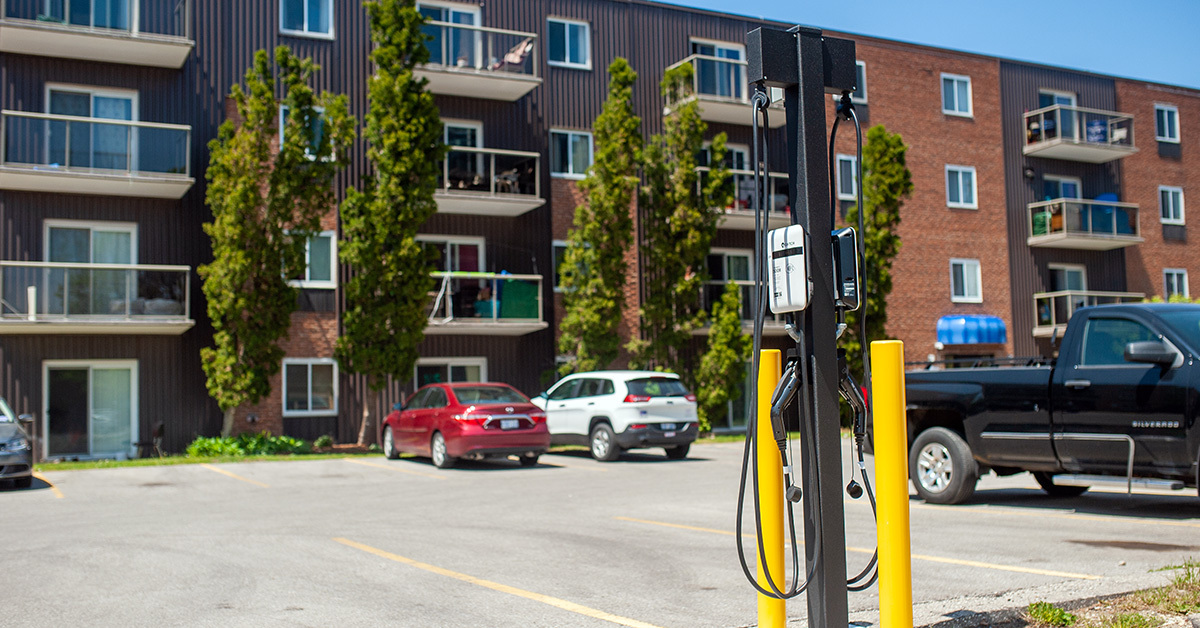
The number of electric vehicles on the road is growing fast.
In the US, BCG forecasts EVs’ share of new vehicle sales will climb to about 30% by 2030. Every major automaker is continuing to build out their electric vehicle business, and the direction is clear: millions more EVs are coming.
And EV drivers prefer to charge up at home. The US Department of Energy says that’s true for at least 80% of EV drivers today.
With roughly a third of all US housing stock classified as multifamily — a share that continues to grow as new construction increasingly favors apartments and condominiums over single-family homes — that creates a significant opportunity for properties that get ahead of the demand. Most multifamily buildings still lack charging infrastructure, and the properties that add it now will be positioned to attract and retain the next wave of EV-driving residents while incentive programs are still available to offset costs.
Curious about the possibilities? Read on to understand the full picture of why and how to install EV charging at multifamily properties today.
Key takeaways
- The Demand is Here: With nearly a third of people living in multifamily homes and EV adoption soaring, on-site charging is becoming a must-have amenity.
- A Self-Funding Upgrade: Unlike a gym or pool, you can bill for charger usage, allowing the amenity to pay for its own installation and maintenance over time.
- Level 2 is the Sweet Spot: For multifamily properties, Level 2 chargers provide the ideal balance of charging speed and electrical infrastructure cost.
- Open Platforms are Critical: Choose OCPP-compliant hardware and software to avoid being locked into a single vendor’s ecosystem, ensuring future flexibility.
Why you should add EV charging to your multifamily property
Adding EV charging to a multifamily property can be a big project, but there are big benefits that can come from it, both short-term and long-term.
EV charging stations can help attract and retain residents
Over the next few years, electric vehicles will become less expensive and more widespread, and more drivers—including your tenants—will begin to seek them out. They’re also going to start wanting to charge their cars at home, and are likely to choose to live at a property that offers charging.
Today, because there are relatively few multifamily properties that have onsite EV charging infrastructure, it’s easy to set your property apart by adding charging. Soon, though, multifamily properties without EV chargers will be at a major competitive disadvantage.

Onsite EV charging can highlight a commitment to sustainability
A commitment to sustainability has become an important consideration for more people when evaluating where to live. In its Voice of the Resident Report, MRI Software shows that more than 60% of renters consider technology and management practices that encourage sustainable living to be either “Important” or “Absolutely essential.”
There are many kinds of initiatives that can go into meeting this new demand. Common steps include updating lighting, improving insulation or installing more efficient heating and cooling technology.
But EV chargers are a prominent addition to the mix and one that can highlight a determination to be sustainable beyond the norm.
EV charging is the rare amenity that pays for itself
Unlike most amenities you’ve added or are considering adding to your building, EV chargers can recoup their cost over time.
We describe payments and billing in more detail here, but here are the basics: A good multifamily EV charging setup will involve directly billing users for their charging sessions. By adding a small fee on top of the cost of electricity, you can make up the cost of your chargers and charging software over time without upsetting your tenants.
This is not something you’re likely to be able to do with other popular amenities—in-building fitness centres, for instance.
Onsite chargers may increase your building’s potential sale value
Here’s something not enough property owners are considering today: the current incentive programs that drive down the cost of installing EV chargers are not going to be around forever.
This means two things.
First, there’s no better time than the present to start installing chargers because when the incentives go away, this kind of upgrade is going to become substantially more expensive.
Second, when chargers are more expensive to install in the future, their existence on a multifamily property will become even more valuable than it is today.
Whether you’re looking to sell in the future or not, a more valuable asset is a more valuable asset. Installing EV chargers at a multifamily property today is an investment that can pay off down the road.
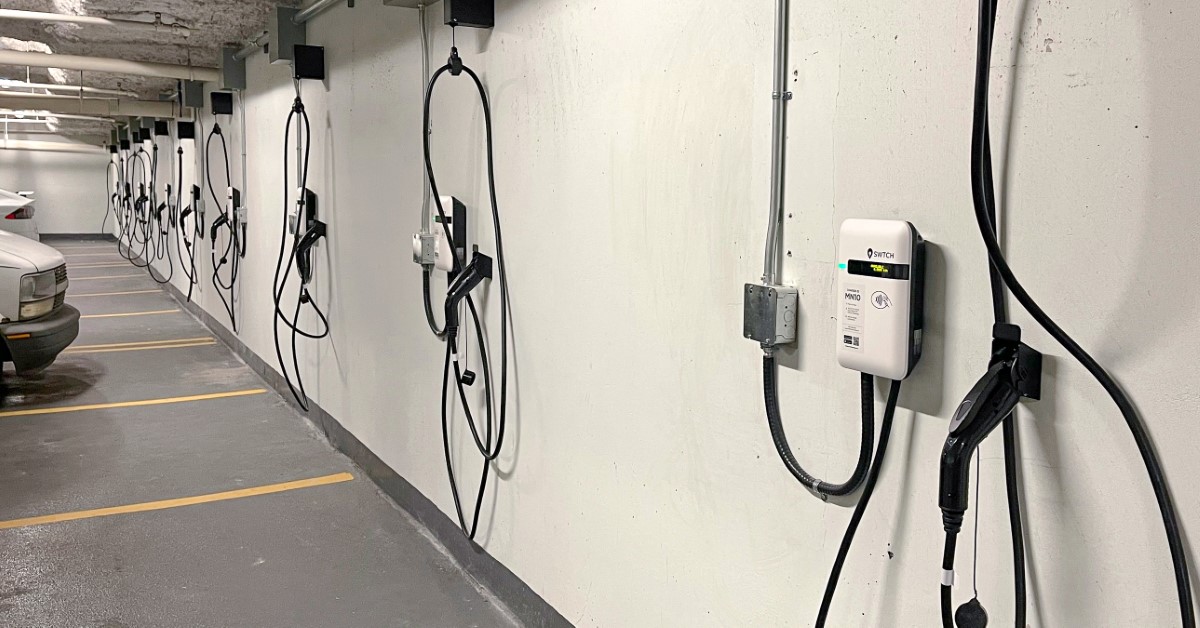
See how SWTCH makes multifamily EV charging simple and affordable.
Key considerations for multifamily EV charging
If you’re looking to install EV charging infrastructure on a multifamily property, there are several critical factors you’ll need to consider to set yourself up for success and avoid potentially unpleasant surprises.
EV charging grants, incentive programs, and tax credits
At the federal and state or provincial levels—and even sometimes local—there are some great incentive programs out there that can help reduce the cost of installing EV chargers at your property. In some areas, these programs can reduce the cost by up to 90%.
You can learn more about some of the available incentive programs right here. If you’re unsure of what is available in your area and would appreciate some guidance, you should also feel free to reach out to our team. We’ll be happy to help.
Electrical capacity & load management
Especially when retrofitting an older building, electrical capacity is a common challenge for multifamily installations. A typical EV charging station installation requires a 40-amp circuit for each charger. For most buildings, this means choosing between either not installing enough chargers to offer good service to residents or spending a fortune on electrical upgrades.
Beyond that, there are concerns about the electrical load that several chargers in concurrent use could place on the building. This could push the building past the threshold at which you’ll have to pay demand charges.
The solution: The better EV charging solutions for multifamily buildings offer “load management” functionality. This is technology that intelligently distributes electrical capacity among multiple chargers to accomplish two main things:
- It can help you install more chargers per circuit or electrical panel than would otherwise be possible, reducing required upgrades
- It can interface with your other demand sources to ensure charging takes place only at times that won’t push your building’s demand too high
You can read more about load management technology here.
Or watch this quick explainer video.
Shared vs private EV charging
Generally, there are two models for installing chargers at a multifamily building:
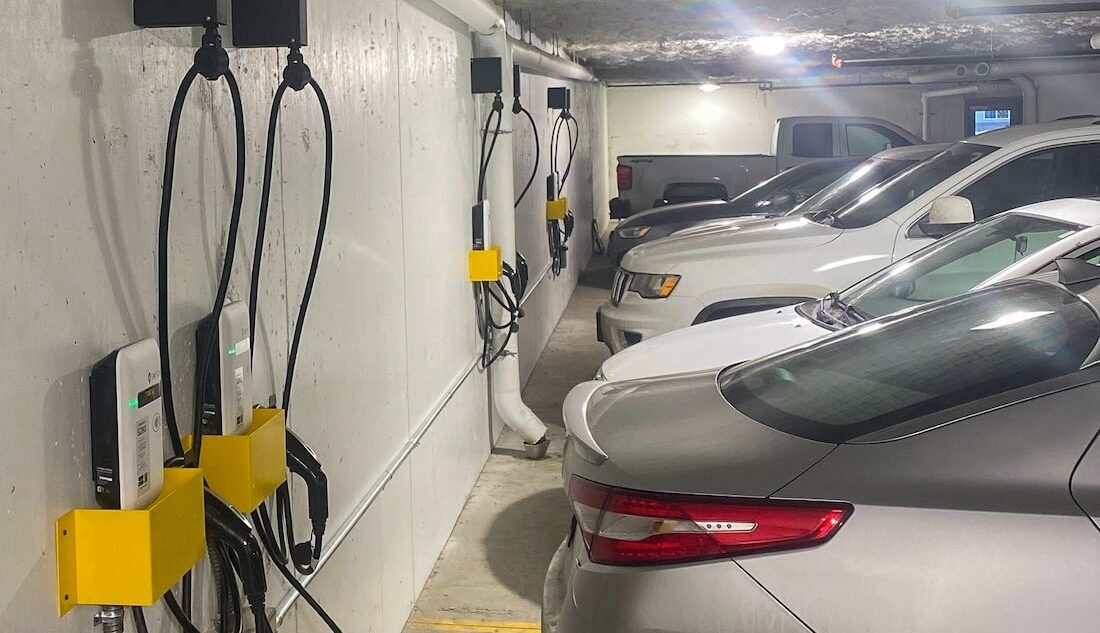
- Shared chargers, where there are designated spots for EV charging as part of the general parking lot for the building. Any resident (or possibly visitor) who needs to charge up will park in the designated spot when they need to charge. hey’ll need to move their car when charging is complete so that another resident can plug their own car in if needed.
- Private or unit-owned chargers, where chargers are installed in designated parking spaces for exclusive use by the residents or guests of specific units (typically found in condominiums where units are owned).
There are pros and cons to both models.
| Charging Model | Installation Cost | User Experience | Maintenance Needs | Best For |
| Shared Chargers | Lower per user | Requires moving car when charging complete | Higher maintenance needs (usage concentrated on fewer chargers) | Rental properties, cost-conscious installations |
| Private/Unit-Owned | Higher per user | Dedicated access, no scheduling or vehicle moving needed | Lower maintenance needs (usage spread across more chargers) | Condominiums, premium installations |
Generally, shared chargers will represent a lower installation cost per user, but they can also experience a greater need for maintenance and do not always offer the very best user experience.
Private or unit-specific chargers tend to be more expensive to install per user, but the experience is generally better, and they tend not to require as much maintenance. In this situation, often the cost to install the chargers and some or all of the installation is passed to the unit owner.
Determining the right number of chargers
What’s more, the number of chargers you’ll need in just a couple of years will surely be higher than what you need today.
There’s no one right way to find the right number. Your best starting point: Conduct a survey of your tenants to understand how many own EVs today and how many intend to purchase one in the next few years. This data will give you a better sense of what you definitely need today and what represents reasonable future-proofing.
You can also read more detailed advice in this Q&A article.
Billing and payment models for multifamily EV charging
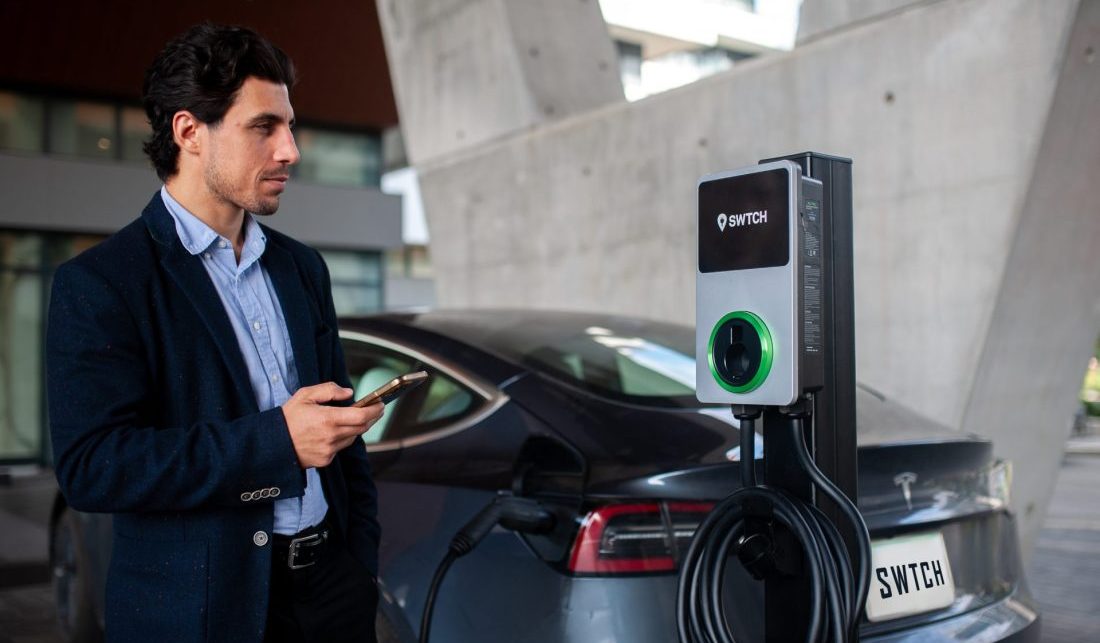
One of the most important things to get right when rolling out your chargers is your pricing and billing strategy.
The key principle to keep in mind: Most EV drivers will not accept a huge markup on the electricity they consume when charging their cars. Avoid overly aggressive pricing strategies.
Instead, we recommend that you charge an amount equal to the cost of electricity (plus associated fees or taxes) plus an additional top-up if you want to recoup installation costs. A good rule of thumb is a top-up fee of approximately $0.25/hour or the equivalent if charging by electricity consumed.
Payment model comparison
As to specific ways to charge drivers, here are the two most common payment models that multifamily charging employs:
| Payment Model | How It Works | Advantages | Disadvantages |
| Pay by Time Plugged In | Drivers pay based on charging session length | Easy to implement and understand | May penalize drivers during periods when charging is slower |
| Pay by Energy Consumed | Drivers pay based on actual electricity consumed | Most fair to drivers, accounts for variations in charging speed | Slightly more complex billing system |
Pay by time: With this model, individual drivers pay based on the length of the charging session. It’s an easy enough system to implement, but depending on how consistent energy delivery is via your chargers (for example, load management technology can mean slower charging in some cases), it may mean drivers pay a higher price relative to the electricity they consume.
Pay by energy: With this model, drivers pay based on the electricity they consume over the course of a charging session. This is probably the most fair way to bill for EV charging, as multiple factors outside of a tenant’s control can impact the rate of delivery of electricity to a vehicle.
Essential features of multifamily EV charging solutions
Even with incentives and cost recovery potential, completing an installation project can be expensive and time-consuming. For that reason, it’s important to plan carefully so that you pick the right hardware and software for long-term success.
The platform (hardware and software) is open
EV chargers can either be a part of a closed platform or an open platform.
When a charger is part of a closed platform, it means that the hardware and software are intertwined, usually created and maintained by the same company, and generally quite locked down.
If, down the line, you decide that you don’t like the terms of your agreement, the capabilities of the software, or the reliability of the hardware, you’ll have to make a difficult choice. You can either rip out all the chargers and start over with a different setup, or you can grit your teeth and keep using the chargers as they are, flaws and all.
Open platforms, on the other hand, offer a great deal of flexibility. You can use a range of charger hardware and software together that you like, provided they are compatible with each other. The industry standard protocol for interoperability is called the “Open Charge Point Protocol,” or OCPP. By selecting hardware and software that adhere to this protocol, you’ll make it incredibly easy to add or replace chargers or switch software providers.
Especially given that multifamily EV charging is a relatively new space, it’s advisable to pick an open platform today. You’ll be able to modify your network as needed over the years as your needs change and the space develops further.
Your chargers are networked and connected to the internet
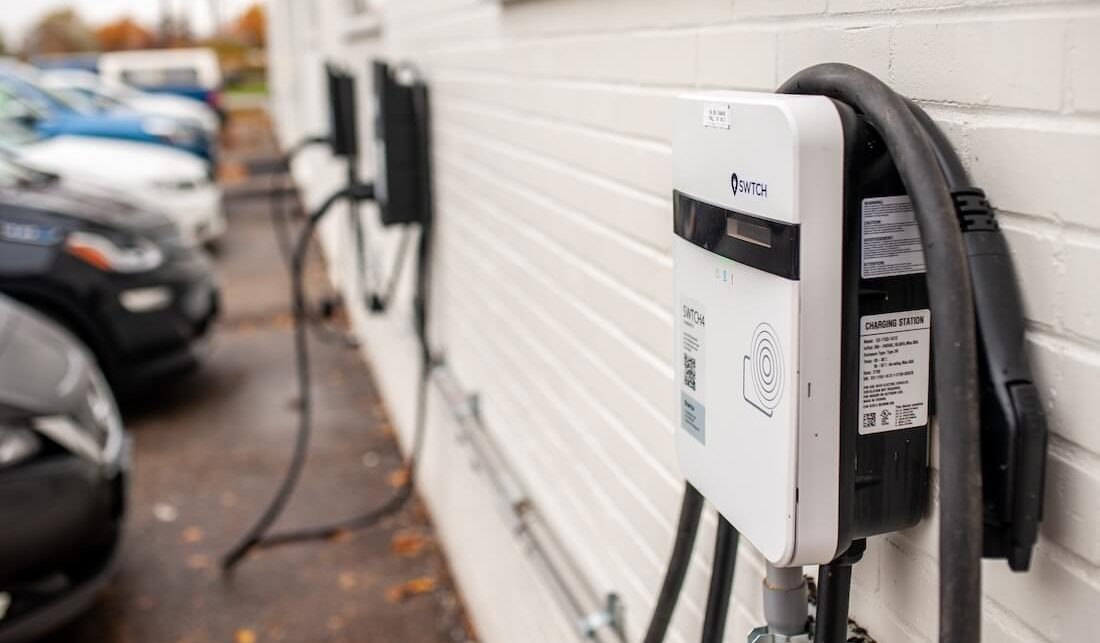
“Networked chargers” are EV chargers that are connected to each other and the internet. This kind of platform is more capable and can help you monitor usage and downtime live and take proactive steps to ensure your chargers are delivering on what they promise.
Unconnected chargers do not provide this kind of access and make it far more difficult to understand the current state of your network. Often, you’ll only learn about issues when a driver takes the time to contact your support team to complain about one of your chargers being out.
There are different kinds of connectivity options that are possible, depending on what your location is like. Wired connections, WiFi connections, and cellular connections are all options to keep your chargers connected to your central management system.
The charging system can expand easily
We’re still in the relatively early stages for EV adoption. Even just a couple of years from now, a substantially higher number of drivers will be in electric cars and in need of chargers.
There’s a good chance that whatever number of chargers you install at a building today, there will be a demand for more in the next few years.
One of the most important things to have in place if you want to have a charging system that can expand easily is electrical infrastructure that is built to accommodate this expansion. This will mean ensuring there’s additional capacity in the panel or panels, sufficient wiring, and, ideally, pre-planned space and conduits for adding additional circuits and chargers. Taking care to plan ahead and ensure your electrical infrastructure is well-planned to accommodate future demand and projects can save a lot of time and money in the future.
Beyond this, you will need to choose a software solution that scales well will help you keep up with demand more easily. This generally means two things:
- Selecting software that makes it easy, from an administrative perspective, to manage all the different chargers you have.
- Selecting an EV charging provider with load management capabilities so that you can install more chargers without needing the same level of expensive electrical upgrades.
Even if you have no intention of installing more EV chargers over the next few years, pick a solution that makes it easy to add more chargers as needed. You’ll thank yourself years from now when it finally is time to install more.
Selecting the right hardware for your EV chargers
There are three main kinds of EV chargers:
- Level 1: The slowest kind of charger, equivalent to plugging a car into a regular wall outlet. The expectation for this kind of charger is that it will take somewhere between 2 and 5 days to charge a car—far too slow for most drivers to find satisfactory.
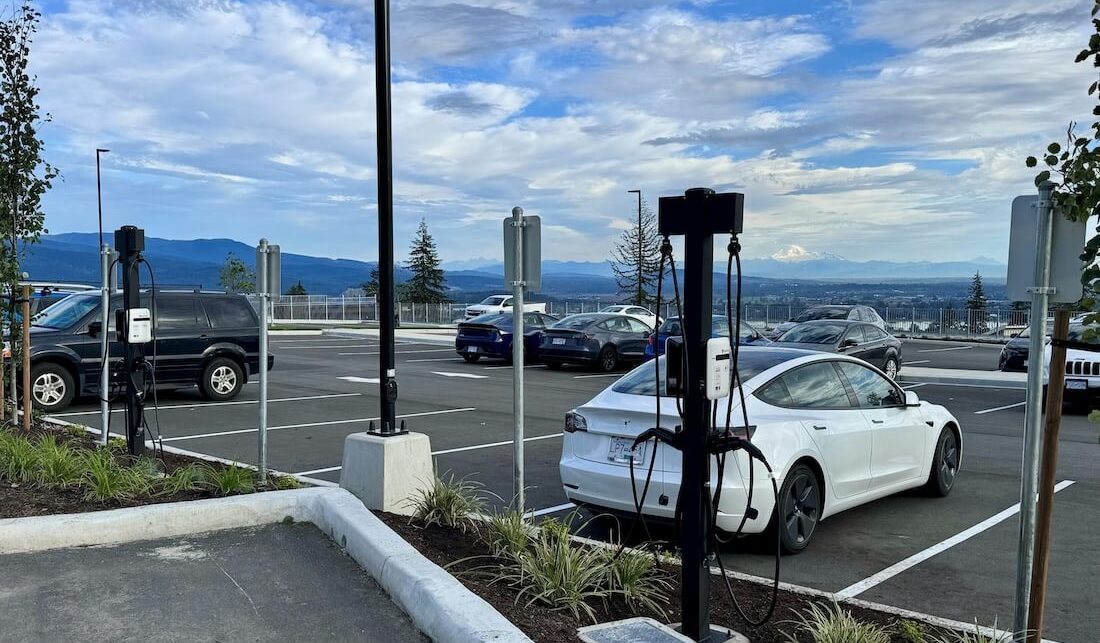
- Level 2: The standard for at-home charging, this kind of charger can typically fully charge a car in 5-10 hours. Typical usage for this kind of charger sees a driver arrive home after work, plug in, and be ready when they leave again the next morning.
- Level 3/DCFC: Typically called a “fast charger,” these chargers typically charge up a car in under an hour. They’re enormously expensive, though, and place heavy demand on the electrical system.
| Charger Type | Time for Full Charge | Typical Use Case | Installation Cost | Power Requirements | Multifamily Suitability |
| Level 1 | 2–5 days | Emergency backup/low-mileage charging | Low | Standard 120V outlet | 🔶 Works, but not recommended |
| Level 2 | 5–10 hours | Daily home charging | Moderate | 240V, 40A circuit | ✅ Recommended |
| Level 3/DCFC | Generally under an hour | Rapid charging on the go | Very high | High-voltage infrastructure | ❌ Too expensive + forces wrong usage pattern |
Almost always, the best choice to make for a multifamily property is to install Level 2 chargers. This allows multiple drivers to plug in at the same time and won’t place as much strain on your system as installing a single DCFC charger. These require a substantial upgrade to your electrical infrastructure, as they require substantially more power. Installing DCFC chargers is also much more expensive than multiple Level 2 chargers.
Essential EV Charging Management Software Features for Multifamily
Because your selection of software impacts both your team and the drivers who use your chargers, there are quite a few features to look out for to ensure you create the best possible experience for everyone.
Features for managing your chargers
Management features within your EV charging software are going to make it easier for your team to stay on top of charger status, see real-time usage data, and make any changes you like to ensure you maintain a good user experience.
Some of the features you should ensure your solution has:
- User access controls so that you can easily add or remove authorized tenants
- Payment and billing controls so that you can change monetization strategy, adjust payment rates, and review session and billing history when needed
- Live status updates so that you can see when chargers are in use or are in need of inspection because of a suspected malfunction
- Load management to ensure your connected chargers share available electrical capacity well, both with themselves and with the building’s other systems
- Reporting and analytics so that you can review usage history, energy consumption, revenue generated, etc.
Features for a good user experience
Generally, users won’t interact directly with the same application you use to manage your network. Instead, they’ll likely make use of either a smartphone app or a web portal to manage their access to your chargers, with the data from that solution syncing up with your backend systems.
Some of the features users expect include:
- Charger availability info to understand when any chargers listed in the app are available to be used
- Payment management so that they can add or remove payment methods for their charging sessions.
- Session initialization so that they can trigger a new charging session
- Session history so that they can review past charging sessions
- Support so that they can quickly reach out to a help desk in the event of an issue when trying to charge their vehicle
Not all charging software will include this kind of user-facing app, but it really is an important piece of the puzzle when trying to ensure that drivers always have access to the information they need. It’s well worth specifically hunting for a platform that offers this for your tenants to use.
Best practices for successful implementation of multifamily charging
The most successful multifamily EV charging projects go beyond simply installing chargers. These additional steps can significantly improve tenant understanding, team management, and long-term infrastructure performance.
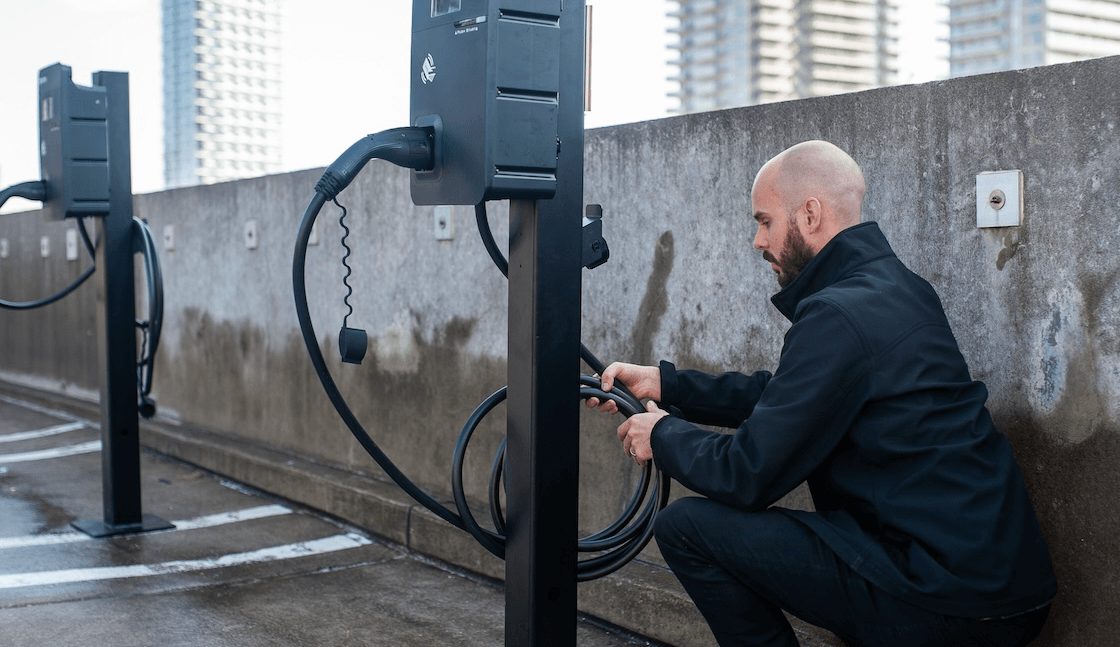
Choose a contractor who has EV charging experience
Many electricians claim they can install EV charging stations at multifamily properties, but experience matters significantly.
Inexperienced installers may make costly errors and are likely less capable of designing systems that can grow and adapt as your needs change.
An experienced partner will know what works best for your building today and have insight into how best to prepare for future expansion. It’s worth a potentially higher price to ensure this project is planned and executed with long-term success in mind.
Run a resident education program
Taking time to educate residents will pay off in the long run and doesn’t have to be complicated.
Whether through in-person info sessions, recorded videos, or email communications, explain to tenants how to:
- Access the chargers
- Follow any policies about moving charged vehicles (for shared chargers)
- Download and use related apps
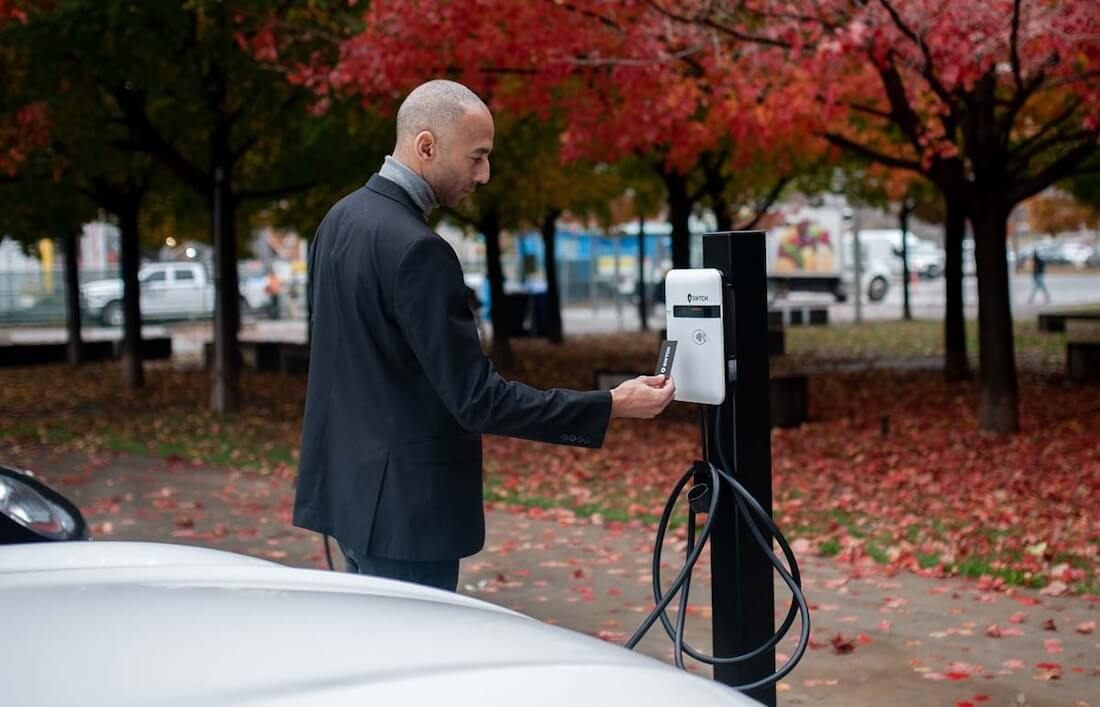
- Request RFID payment cards
Investing a little time and some resources in these will likely save you significant time and headaches having to explain these sorts of things ad-hoc if drivers get stuck.
Evaluate solutions providers as long-term partners
One problem in the EV charging space is that vendors often seem helpful initially but become unreachable when issues arise.
To avoid getting into this situation, it’s worth your while to evaluate potential hardware or software providers for their potential as long-term partners in your projects.
Evaluation criteria for potential partners:
- How accessible are they when problems occur?
- How easily can you reach them for quick questions?
- How proactive are they about checking in to ensure satisfaction?
Ask these questions directly and review online testimonials to understand their long-term support quality. Whoever you decide to work with, you want to be sure that they’re legitimately helpful and there to help you succeed for the long haul.

Plan for future expansion immediately
Your property’s EV charging needs will likely be substantially different in the future than they are today.
For that reason, it’s a good idea to spend a little time at the outset to figure out what you might be able to do now to make your life easier in the future.
Future-planning examples:
- Complete more extensive electrical upgrades now (while grants are available) with an eye toward future charger additions
- Install chargers with compatible software that can handle bidirectional charging, even if few EVs support this technology today
- Plan electrical infrastructure to accommodate future expansion without major renovations
Electric vehicle drivers aren’t going to stop wanting home charging access. Expect demand to increase and prepare accordingly.
Want to take the next step in rolling out EV charging at your multifamily property?
Get in touch with our team! We’re here to help.
Frequently asked questions
How many EV chargers should I install at my multifamily property?
There’s no one right answer. Conduct a tenant survey to assess current EV ownership and purchase intentions. Work with your solutions provider(s) to find the right number both for short and long-term success.
What government incentives are available for multifamily EV charging?
It will depend on your country and state or province, as there are programs at the federal, state/provincial, and even utility levels. Your solutions provider or your installation partner should be able to help you find the right ones to apply to.
Should I choose shared or private EV chargers?
Shared chargers cost less per user but require more management and have higher maintenance needs. Private chargers offer a better user experience but cost more initially. Choose based on property type (rental vs. owned units) and resident preferences.
How much should I charge residents for EV charging?
Best practice is electricity cost plus modest markup (approximately $0.25/hour or the equivalent). Avoid aggressive pricing, as EV drivers expect reasonable rates for home charging.
What’s the difference between open and closed charging platforms?
Open platforms (using OCPP protocol) allow mixing hardware/software vendors and easier future upgrades. Closed platforms lock you into one vendor’s ecosystem with limited flexibility for changes.
Do I need networked chargers or are “dumb” chargers sufficient?
Networked chargers are strongly recommended. They provide real-time monitoring, usage analytics, remote troubleshooting, and proactive maintenance alerts. “Dumb” chargers offer no visibility into performance or issues.
What electrical upgrades are typically required for multifamily EV charging?
By default, each Level 2 charger requires a 40-amp circuit, but load management systems can reduce upgrade requirements by unlocking electrical capacity at your property. Work with your EV charging solutions provider to understand what is possible at your property.
How do I determine if my property qualifies for EV charging incentives?
Incentive eligibility varies by location, property type, and specific program requirements. Consult with experienced EV charging contractors or check with local utility companies and government agencies for current programs.

Written by
Rob Côté
Marketing Communications Manager, SWTCH